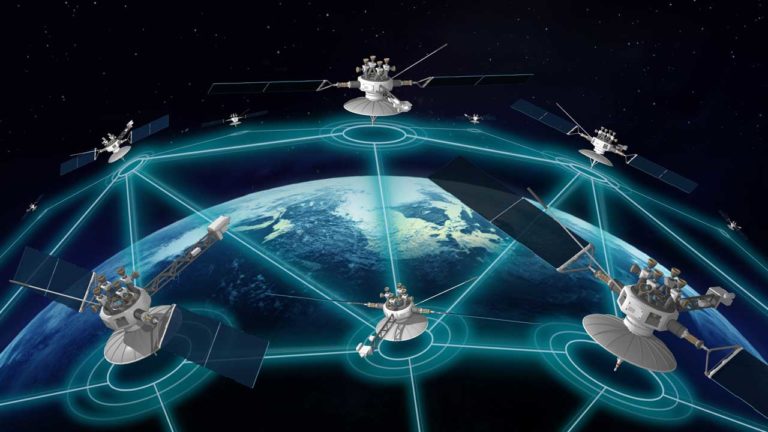
Low Earth orbit (LEO) satellite internet is rapidly becoming a game-changer for high-speed internet access, particularly in remote areas and during disaster response efforts. The impact of this technology on communication and coordination in humanitarian aid and disaster response work has already been significant, with real-life examples showcasing its potential.
One of the most notable examples of the benefits of LEO satellite internet is Disaster Tech Lab’s use of this technology in their humanitarian response efforts. The organization has been utilizing LEO satellite internet in their response efforts, providing essential communication services to those affected by disasters around the world.
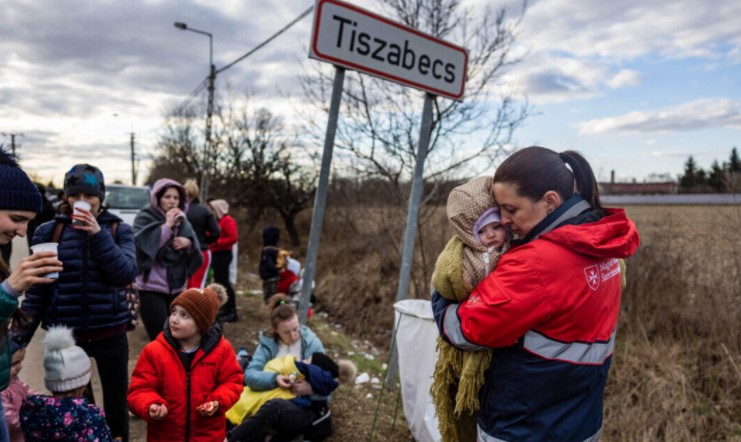
Disaster Tech Lab has been increasingly relying on LEO communication services for their disaster response work. For example, the organization deployed LEO satellite internet services in Ukraine to provide communication services to local communities, regional government, the Ukrainian military, and other NGOs. The communication services enabled effective coordination of aid and the delivery of essential supplies, as well as providing connectivity to remote medical facilities.
Another example of LEO satellite internet aiding disaster response efforts is during the response to Hurricane Maria in Puerto Rico. SpaceX’s Starlink provided critical connectivity to emergency medical personnel, facilitating communication between first responders and affected communities, and making a significant difference in the coordination of aid and the delivery of essential supplies.
Starlink’s lower price point for both equipment and service has been a driving force behind the large-scale adoption of this technology. The lower cost makes it easier for organizations to provide essential communication services to affected communities during disaster response efforts, enabling them to coordinate aid efforts more effectively.
LEO satellite internet has also been a game-changer for remote medical care. Doctors Without Borders has been utilizing LEO satellite internet in its response efforts in places like South Sudan, where they are able to remotely monitor and provide medical support to patients in remote areas.
Project Kuiper, Amazon’s LEO satellite internet project, is also expected to make a significant impact on communication and coordination efforts in disaster response situations. Amazon plans to launch a constellation of over 3,000 LEO satellites, providing high-speed internet access to underserved areas around the world.
In conclusion, LEO satellite internet has already proven to be a vital tool for facilitating communication and coordination in disaster response efforts. With its ability to provide high-speed internet access to remote areas and its potential to bridge the digital divide, LEO satellite internet is poised to revolutionize the way we respond to disasters and deliver aid to those in need.
The concept of a “15-minute city” proposes that neighborhoods should provide residents with access to all their daily needs within a 15-minute walk or bike ride. The idea has gained attention as a potential solution to urbanization and sustainability challenges. While this concept may sound attractive, it is not a practical solution in most urban areas. This article outlines several reasons why the “15-minute city” is a bad idea.
Firstly, cities are multifaceted and complex, with different types of neighborhoods that serve various purposes. Creating a neighborhood that can provide all of a person’s daily needs within a 15-minute walk or bike ride is unrealistic in most cities. For example, access to specialized medical care, higher education, and employment opportunities may not be possible within a single neighborhood. Additionally, there may be issues with land use regulations, zoning, and property values that can limit the creation of such a neighborhood.
Secondly, people have diverse needs and preferences, and a one-size-fits-all approach to urban planning is unlikely to meet the needs of everyone. The concept of the “15-minute city” ignores this fact and assumes that all people have the same daily needs. In reality, people have different professions, interests, and lifestyles that require different resources and services.
Thirdly, the concept of a “15-minute city” may perpetuate inequality. Creating a neighborhood that can provide all daily needs may be more feasible in affluent areas, but it may not be possible in low-income neighborhoods. Low-income neighborhoods may not have the necessary infrastructure, resources, or services to provide residents with access to all their daily needs. This could create a two-tiered system where some people have access to everything they need, while others do not.
Additionally, the “15-minute city” concept may be detrimental to economic growth. Cities rely on diverse businesses and industries to thrive, and limiting people to their immediate neighborhood could restrict economic activity by preventing people from traveling to other parts of the city for work, shopping, or leisure activities. This could also limit access to specialized goods and services that may not be available in a person’s immediate neighborhood.
Another issue with the “15-minute city” concept is that it can be seen as authoritarian and elitist. The idea assumes that people should live and work within their immediate neighborhoods, effectively limiting their mobility and freedom of choice. This can be seen as a form of social engineering that imposes a particular lifestyle and values on residents. Furthermore, the concept may perpetuate existing social inequalities by prioritizing the needs of affluent residents who can afford to live in neighborhoods that provide all their daily needs. This can further marginalize low-income residents who may not have access to the same resources and services. The “15-minute city” concept can, therefore, be seen as a classicist approach to urban planning that prioritizes the needs of the privileged few over the many.
Finally, the “15-minute city” concept may not be environmentally sustainable. While walking and biking are better for the environment than driving, there are limits to how far people can reasonably travel on foot or bike. If people live 15 minutes away from their workplace, they may be less likely to use public transportation, leading to more cars on the road. Additionally, the concept may not be viable in areas with extreme weather conditions or topography.
In conclusion, the “15-minute city” concept is not a practical solution for most cities. Rather than pursuing a one-size-fits-all approach to urban planning, cities should focus on creating diverse neighborhoods that meet the needs and preferences of all residents. This requires a comprehensive and inclusive approach to urban planning that considers the unique characteristics and challenges of each neighborhood.
Finka, M., & Blaschke, T. (2020). Toward a sustainable urban future: The 15-minute city as a new spatial model for urban areas. Sustainability, 12(11), 4433. https://doi.org/10.3390/su12114433
Grassroots volunteer organizations play a vital role in providing humanitarian aid to Ukraine. These organizations, often consisting of local volunteers and community members, are able to provide aid in a targeted and efficient manner, reaching those in need quickly and effectively.
One example of a successful grassroots volunteer organization in Ukraine is the “People’s Project,” which began as a small group of volunteers in 2014 and has since grown to become one of the largest humanitarian aid organizations in the country. The organization focuses on providing aid to Ukrainian soldiers and veterans, as well as internally displaced persons affected by the ongoing conflict in eastern Ukraine.
According to a report by the Ukrainian news outlet Hromadske, “The People’s Project has been able to achieve results that the government has not been able to achieve, in terms of providing aid to the front line and to internally displaced persons.”
Another successful grassroots volunteer organization in Ukraine is the “Happy Child” charity, which focuses on providing aid to children in need, including those affected by the conflict in eastern Ukraine. The organization provides food, clothing, and other essential items to children, as well as running educational programs and providing psychological support.
In an interview with the Ukrainian news outlet Ukrinform, the founder of Happy Child, Olga Stefanishina, noted that “grassroots volunteer organizations are able to react quickly and effectively to the needs of those in need, and can provide aid in a targeted and efficient manner.”
These organizations rely on public donations and funding from charitable foundations and individuals to continue their work. Studies have shown that grassroots volunteer organizations are often more effective than government-run aid programs in providing aid to those in need. A study by the organization Humanitarian Outcomes, (https://humanitarianoutcomes.org/research/grassroots-humanitarian-response/) found that grassroots organizations were able to provide aid to communities in need faster and more efficiently than government-run programs.
In conclusion, grassroots volunteer organizations play a vital role in providing humanitarian aid to Ukraine. These organizations, consisting of local volunteers and community members, are able to provide aid in a targeted and efficient manner, reaching those in need quickly and effectively. Studies have shown that grassroots volunteer organizations are often more effective than government-run aid programs in providing aid to those in need.
Western nations, including the United States and several European countries, have been providing military equipment to Ukraine in an effort to support the country in its ongoing conflict with Russia. However, this donation of equipment is having a significant impact on the military readiness of these donating countries.
One of the main reasons for this is that many of the items being donated are older, surplus equipment that is being taken out of the active inventory of the donating country’s military. This means that the country is losing access to equipment that could be crucial in the event of a crisis or conflict. For example, the US has provided Ukraine with older model Humvees and night vision goggles, equipment that is still in use by the US military. According to the Heritage Foundation, a US-based think tank, “the United States has provided Ukraine with $1.5 billion in security assistance since 2014, including $250 million in military aid.”(https://www.heritage.org/europe/report/ukraine-us-security-assistance-since-2014)
Another issue is that the equipment being donated is often not compatible with the systems and technology currently in use by the receiving country. This can lead to delays and complications in training and maintenance, as well as difficulties in integrating the equipment into existing operational plans. A report from the European Leadership Network states that “the provision of equipment and training has been hampered by a lack of standardization in the Ukrainian Armed Forces, which has made it difficult for Western countries to provide equipment that is compatible with existing Ukrainian systems.” (https://www.europeanleadershipnetwork.org/wp-content/uploads/2018/02/ELN-Report-Western-Military-Assistance-to-Ukraine.pdf)
Additionally, the cost of upgrading and maintaining the donated equipment can be significant, putting a strain on the already limited resources of the receiving country. This is particularly problematic for Ukraine, which is currently facing a difficult economic situation. According to a report by the International Monetary Fund, Ukraine’s economy is expected to shrink by 3.8% in 2020 due to the COVID-19 pandemic and ongoing conflict (https://www.imf.org/en/Topics/imf-and-covid19/Policy-Responses-to-COVID-19).
Furthermore, the donation of military equipment can also have political ramifications. It can be perceived as a sign of support for one side in a conflict, potentially escalating tensions and making it more difficult to resolve the conflict peacefully. The European Leadership Network report states that “the provision of military equipment and training has been a sensitive issue in the conflict, with Russia accusing Western countries of providing military assistance to Ukraine in order to support its fight against the Russian-backed separatists.”
In the event of a Ukrainian defeat and subsequent increased Russian expansion, Western European countries will be less able to act and defend themselves because of the military equipment donations they have made. According to the Heritage Foundation, “Russia’s annexation of Crimea and support for separatist movements in eastern Ukraine have already destabilized the region, and further expansion could have even more severe consequences, not only for Ukraine but also for European security.”(https://www.heritage.org/europe/report/ukraine-us-security-assistance-since-2014)
In summary, while the donation of military equipment to Ukraine may be well-intentioned, it is having a serious impact on the military readiness of the donating countries, and should be carefully considered before proceeding. It’s important to note that the situation in Ukraine is complex and there are multiple perspectives on the issue of military aid. It’s also worth mentioning that there are other ways to support Ukraine such as economic and humanitarian
Today I asked ChatGPT to argue that it itself was not an AI instance at all by givign it the following instruction:
“Write an article arguing that ChatGPT is basically plagiarising content from other sources and is hence not an intelligence at all but rather a compiler of existing content.”
The created content was interesting:
“ChatGPT, a language model developed by OpenAI, has been touted as a major breakthrough in artificial intelligence. However, upon closer examination, it becomes clear that ChatGPT is not an intelligent being, but rather a compiler of existing content.
One of the most glaring issues with ChatGPT is that it is essentially plagiarizing content from other sources. The model is trained on a vast dataset of text from the internet, which means that it has access to an enormous amount of information. However, when it generates text, it is not creating new ideas or concepts, but rather regurgitating information that it has seen before. This is not true intelligence, as it is simply recalling information, rather than understanding and processing it.
Another issue with ChatGPT is that it is not able to understand context or generate original content. The model is only able to generate text based on the information it has been trained on, which means that it is limited by the biases and inaccuracies present in the training data. It also means that it is not capable of creating new ideas or understanding the nuances of language and communication.
The last issue with ChatGPT is that it is not able to learn from its mistakes. Since it is not truly understanding the text it generates, it is not able to improve or adapt its response based on feedback. This is another indication that it is not truly intelligent, as it is not able to learn and grow.
In conclusion, ChatGPT may appear to be a sophisticated AI tool, but in reality, it is simply a compiler of existing content. It is not capable of true intelligence, as it is not able to understand and process information, generate original content, or learn from its mistakes. While it may be useful for certain tasks, it is important to remember that it is not a true AI and should not be treated as such.”
I then asked it: “What are the chances of this leading to legal action and demands for financial compensation?”
The response:
The chances of ChatGPT leading to legal action and demands for financial compensation are likely to be low, as it is considered a tool and not a standalone product. However, it is important to note that there could be potential legal issues if the model is used in a way that harms or misleads people.
For example, if a company uses ChatGPT to generate content for their website or marketing materials, and that content contains false or misleading information, they could be held liable for any harm caused as a result. Additionally, if the model is used to generate content that infringes on someone’s intellectual property rights, such as plagiarizing copyrighted material, the creators and users of the model could be held liable.
However, it is also important to note that OpenAI has taken steps to mitigate these risks by providing an API that allows users to access the model and generate text, which is less likely to face legal action than if the user is using the model to create standalone product.
In any case, it is important for companies and individuals using ChatGPT to be aware of the potential legal issues and take appropriate measures to mitigate them, such as ensuring that the content generated by the model is accurate and not infringing on anyone’s rights.
The following is simply speculation and a train of thought exercise. None of this is a comprehensive prediction or represents the opinion of the writer.
If Ukraine were to lose a war with Russia, the consequences would likely be severe for the Ukrainian people and government.
Firstly, Ukraine would likely lose control of the Crimean Peninsula, which Russia annexed in 2014. This would mean that the Ukrainian government would no longer have control over the region and its resources, including the important port of Sevastopol.
Additionally, a Russian victory could also lead to the loss of other territories in eastern Ukraine, where pro-Russian separatists have been fighting against Ukrainian government forces. This would result in the displacement of many Ukrainian citizens and damage to the country’s infrastructure.
Furthermore, a Russian victory would likely lead to an increase in Russian military and political influence in the region, potentially undermining Ukraine’s sovereignty and independence.
On the economic front, a Russian victory could also have negative consequences for Ukraine’s economy. Russia is a major trading partner for Ukraine, and a disruption of economic ties could lead to a decline in economic growth and increased poverty for the Ukrainian people.
Moreover, it would also lead to a humanitarian crisis as many people would be forced to flee the occupied territories, leaving behind their homes and possessions.
In conclusion, if Ukraine were to lose a war with Russia, the consequences would be devastating for the Ukrainian people and government. It would result in the loss of territory, damage to the country’s infrastructure, and a decline in economic growth. Additionally, it would also have a negative impact on the region’s stability and security. It’s important that diplomatic efforts are made to avoid any kind of war and resolve the issues through dialogue and negotiation.
What is the likelyhood of Russia then invading other countries
It is difficult to predict with certainty what Russia’s actions would be in the event of a victory in a war with Ukraine. However, it is possible that a Russian victory could embolden the country to take further aggressive actions in the region.
One possible scenario is that Russia could use its military and political influence to try to expand its sphere of influence and potentially invade other neighboring countries. This could lead to increased tensions and destabilization in the region, as other countries may feel threatened by Russian aggression and take steps to defend themselves. Some examples of countries that may be at risk of Russian aggression include Belarus, Estonia, Latvia, Lithuania, and Poland, all of which are members of NATO.
However, it is important to note that the likelihood of Russia invading other countries is uncertain and would depend on a variety of factors, including the reactions of other countries and international organizations, and the internal politics of Russia.
It should also be noted that, any kind of war and invasion would have severe consequences not just for the countries and people involved but also for the global community. Therefore, diplomatic efforts should be made to avoid any kind of war and resolve the issues through dialogue and negotiation.
What would happen is Russia loses the war with ukraine?
If Russia were to lose a war with Ukraine, the consequences would likely be significant for the Russian government and military.
Firstly, a defeat in a war with Ukraine would likely damage the reputation and prestige of the Russian government and military. This could lead to a loss of public support and confidence in the government’s ability to protect the country’s interests.
Furthermore, a loss in a war with Ukraine could also lead to a loss of territory, particularly in the Crimea region which Russia annexed in 2014. This would mean that Russia would have to give up control of the region and its resources, including the important port of Sevastopol.
Additionally, a defeat in a war with Ukraine could also lead to an increase in Western and Ukrainian military and political influence in the region, potentially undermining Russia’s regional influence and security.
On the economic front, a defeat in a war with Ukraine could also have negative consequences for Russia’s economy. War is expensive and a defeat would likely lead to significant financial losses, as well as potential sanctions and isolation from the international community.
Moreover, a defeat would also lead to a loss of human lives and it would have a negative impact on the morale of the Russian people.
In conclusion, if Russia were to lose a war with Ukraine, the consequences would be significant for the Russian government and military. It would result in a loss of territory, damage to the country’s prestige, and a decline in economic growth. Additionally, it would also have a negative impact on the stability and security of the region. It’s important that diplomatic efforts are made to avoid any kind of war and resolve the issues through dialogue and negotiation.
Would a Russian defeat lead to Putin being ousted? If so who is likely to replace him?
It is difficult to predict with certainty what the outcome would be if Russia were to lose a war with Ukraine and whether it would lead to President Putin being ousted.
A defeat in a war would likely lead to a loss of public support for the government, which could lead to protests and calls for change. However, Putin has been in power for a long time, and has a strong grip on the country’s political system, it’s not easy to predict if a defeat in a war would lead to his ousting.
If Putin were to be ousted, it is unclear who would be likely to replace him. The Russian political system is highly centralized and controlled by Putin and his allies, so it is difficult to say who would be in a position to take over. However, Putin’s inner circle of advisors and members of the government would be the most likely candidates to take over in the event of his departure.
It is also worth noting that, it would be a political decision and it could also depend on the internal politics of Russia, the severity of the defeat, the public sentiment, and the actions of other political actors within the country.
In conclusion, it is difficult to predict what would happen if Russia were to lose a war with Ukraine and whether it would lead to President Putin being ousted. The outcome would depend on a variety of factors and is highly uncertain.
Will Putin being ousted lead to instability?
It is possible that President Putin’s ousting could lead to instability in Russia, as it would likely be a significant change to the country’s political system and could result in a power vacuum.
The Russian political system is highly centralized and controlled by Putin and his allies, so his departure could lead to uncertainty about who would be in control of the country, and what direction it would take. This could lead to a struggle for power among different factions within the government or political elite, and could also lead to protests and civil unrest.
Additionally, Putin’s leadership has been a source of stability for Russia in the past, and his departure could lead to a loss of direction and purpose for the country. This could result in a period of uncertainty and instability, as different factions or individuals compete for control and influence.
On the other hand, it is also possible that Putin’s departure could lead to a peaceful transition of power, and that a new leader could emerge who is able to bring stability to the country. This would depend on a variety of factors, including the public sentiment, the internal politics of Russia, the actions of other political actors within the country, and the outcome of any power struggles that may occur.
In conclusion, it is possible that President Putin’s ousting could lead to instability in Russia, as it would likely be a significant change to the country’s political system and could result in a power vacuum. However, the outcome would depend on a variety of factors and is highly uncertain.
What would happen is Zelensky was ousted by a pro-Russian president?
If President Zelensky were to be ousted by a pro-Russian president, it could have significant consequences for Ukraine and the region.
Firstly, it would likely mean a shift in Ukraine’s foreign policy towards closer ties with Russia and away from the West. This could lead to a weakening of Ukraine’s relations with Western countries and international organizations, and an increase in Russian influence in the country.
Additionally, a pro-Russian president in Ukraine could also lead to a change in the country’s domestic policies, particularly with regard to issues such as minority rights, press freedom, and corruption. This could lead to a deterioration of democratic institutions and human rights in the country.
Furthermore, a pro-Russian president could also lead to a change in the country’s stance on the ongoing conflict in eastern Ukraine. This could mean a return to negotiations or even a settlement that would be more favorable to Russia, and could lead to a loss of territory or autonomy for Ukraine.
On the economic front, a pro-Russian president could also lead to a disruption of economic ties between Ukraine and the West, and a strengthening of economic ties between Ukraine and Russia. This could lead to a decline in economic growth and increased poverty for the Ukrainian people.
In conclusion, if President Zelensky were to be ousted by a pro-Russian president, it could have significant consequences for Ukraine and the region. It would likely mean a shift in foreign policy towards Russia, a change in domestic policies, and a change in the stance on the ongoing conflict in eastern Ukraine. Additionally, it would also have a negative impact on the country’s economy. It’s important that diplomatic efforts are made to support democratic institutions and the sovereignty of Ukraine.
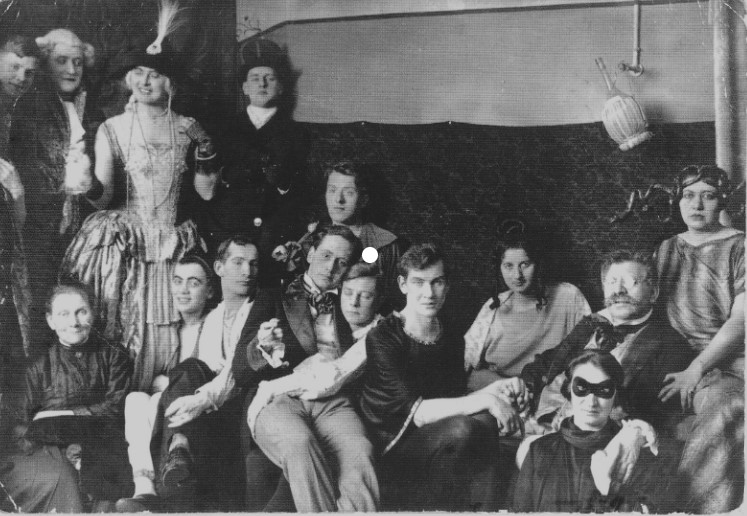
Weimar Germany and contemporary liberal society share several striking similarities in their social values, particularly with regard to gender fluidity and the rise of “woke” ideology. These similarities can be traced back to the tumultuous political and cultural climate of Weimar Germany, which was marked by rapid social change and a rejection of traditional values.
One of the most significant similarities between Weimar Germany and contemporary liberal society is the emergence of non-binary and fluid gender identities. In Weimar Germany, the cultural and artistic movements of the time, such as Expressionism and Dadaism, celebrated individual expression and rejected traditional gender roles. This was reflected in the proliferation of LGBTQ+ communities and the adoption of more fluid gender identities, particularly among artists and intellectuals.
Similarly, in contemporary liberal society, there has been a significant shift towards the acceptance and celebration of non-binary and fluid gender identities. The rise of the LGBTQ+ rights movement and the proliferation of social media platforms have given individuals more opportunities to express their gender identities and challenge traditional notions of gender. As a result, we have seen a growing recognition and acceptance of non-binary and fluid gender identities in mainstream culture.
Another striking similarity between Weimar Germany and contemporary liberal society is the rise of “woke” ideology, which emphasizes social justice and the critique of power structures. In Weimar Germany, intellectuals and artists were at the forefront of critiquing traditional values and calling for social change. This was particularly evident in the work of figures such as Bertolt Brecht, who used his plays to challenge capitalist and patriarchal values.
In contemporary liberal society, the concept of “wokeness” has gained widespread attention, particularly among younger generations. “Woke” ideology emphasizes the need to challenge and dismantle oppressive power structures, including those based on race, gender, and class. This ideology has been embraced by a wide range of social movements, including Black Lives Matter and the Me Too movement, which have used their platforms to call for social and political change.
Despite these similarities, it is important to note that the social values of Weimar Germany and contemporary liberal society also have significant differences. One key difference is that the social values of Weimar Germany were shaped by the unique political and cultural context of the time, which was marked by the aftermath of World War I, the collapse of the monarchy, and the rise of authoritarian regimes. In contrast, the social values of contemporary liberal society are shaped by a range of global and local factors, including technological advancements, globalization, and the influence of social media.
Overall, it is clear that Weimar Germany and contemporary liberal society share several significant similarities in their social values, particularly with regard to gender fluidity and the rise of “woke” ideology. These similarities can be traced back to the turbulent cultural and political climate of Weimar Germany, which was marked by rapid social change and a rejection of traditional values. While there are also significant differences between the two societies, these similarities serve as a reminder of the enduring impact of cultural and artistic movements on social values and the ongoing struggle for social justice.
References:
Gengenbach, H. (2002). Gender and Sexuality in Weimar Modernity: Film, Literature, and “New Objectivity”. Cambridge University Press.
Jenkins, J. (2019). “Wokeness” and the Culture Wars. Public Culture, 31(3), 413-431.
Stecopoulos, H., & Uebel, M. (Eds.). (2007). Race and the Crisis of Humanism. Palgrave Macmillan.
There has been a lot of heated discussion this year about the new National Broadband Plan in Ireland. This umpteenth iteration of an attempt to bring broadband to the Irish masses is set to cost in excess of 3 billion euro. However I am not here to discuss this monstrosity of a plan. No, I want to share an insight of the realities of currently getting broadband in Ireland and the issues and obstacles encountered. Issues and obstacles which will not be removed by the new plan either.
Let me give you a bit of background; I live in a rural village of which there are many in Ireland. It has approx 1200 inhabitants, a busy Main Street, shops and other businesses. About 1.5 years ago I moved to a different house in the town. In the previous house I had DSL standard broadband. It was supplied by Eir over a copper line but they marketed it as “Fiber Broadband”. My new home is, in a straight line, less than a mile away. For reference the telephone exchange lies halfway between these two locations. In made the in hindsight stupid assumption that getting a broadband service in my new home would be no problem. WRONG!
I asked Eir to move the service to my new address (something which involves the baffling requirement of setting up a new account) and an engineer duly arrived. After some looking around the engineer notified me that he could not connect me as I did not have an active phoneline and that I had to contact Eir requesting that a new phoneline was installed. I contacted Eir and came up against the first hurdle: the house on which I live is part of a development of former holiday homes which used to belong to a hotel next door. The hotel burnt down many years ago and has never been rebuilt. It turns out that the phone lines going into all of the houses run to the hotel and into the hotel’s telephone exchange. Which was burnt to a crisp. So there was no connection to the main telephone network. So I suggested that Eir connect the existing cabling to their main network. But that was a too straightforward idea; issues of site access, costs etc came into play at this stage. In short a mountain of bureaucracy was thrown up. As I am not easily deterred I started looking at suggesting different options. Did I mention that for my job I design and build communications networks in disaster areas? No? Well that experience helped…
We looked at digging trenches for underground ducting (out), repurposing some of the existing ducting (also out). Eventually the decision was made to put up a number of old school telegraph poles at the back of the houses, run fiber on these poles and via a pole on a neighbouring property connect all this to the main telephone network. Added benefit was that we would be the first houses in the town connected with *real* fiber.
Once everyone had decided that this was the best, and quite frankly only, option the process was put in to motion. There were several stages of the plan:
Design the site plan.
Place the telegraph poles.
Put fiber on the telegraph poles.
Mount distribution units on the poles.
Blow fiber in the underground ducting from the houses to the exchange.
Connect all the bits together (fiber on the poles to the underground fiber, underground fiber to the equipment in the exchange and distribution units to the individual homes).
One would expect somehow that all if not most of this work would be done by the same crew. WRONG!
The work is managed by Open Eir who contract all the actual work out to KN Networks. KN in turn uses a different crew for each part of the process. Not only that but the coordination and communication between these crews and between KN and Open Eir is atrocious. To give you a timeline: I started trying to get broadband in May 2018. The first telegraph poles were put into place on June 20th 2019. They took 2 days to install.
Fiber was put on the poles on July 8th 2019. The distribution units were put in place 2 weeks later. On 13/8 an installer arrived at my house supposedly to instal my internet service. However it expired that his work-order stated “an installation over copper”.
I helpfully told him that it should be fiber as there is no copper line in place at all. I even pointed to the fiber cable on the pole beside my house and yes he confirmed that he could see it too. But no, his work order said “copper” so he could not proceed and left. I duly called my contact in Open Eir who told me that yes all the pieces were in place but no, they had not been connected yet. “When will that happen?” I asked. “I don’t know” was the less than helpful answer.
We are now near the end of October and the last update I was given was that all the pieces are connected bar the last connection at the exchange. I was told this several weeks ago. “Any idea of that will be done?” I asked. “I have someone calling out to do that this afternoon” was the reply.
Now, nearly 18 months since I started this process I still have no connection. Not only do I not have broadband, the other 21 houses in the development don’t have any either.
“But the National Broadband Plan will solve all!” that I hear you say. Really? Really? When it takes this, long, such a huge amount of work and cost to (not even) connect a few houses less than 500 yards from the nearest telephone exchange? I see the NBP resulting mostly in burning through that 3 billion euro of tax payers money…..
I came across a good read on why you should use the DuckDuckGo search engine over Google.
While the article obviously slanted in favour of DuckDuckGo it was worth reading as it went in to detail on how Google tracks you online behaviour. This is been more valid when you realise that your Android phone is owned by Google and that recent revelations have shown that apps included in the factory install of your smartphone will still track you even when you think you have opted out. Read more here..
Aside from all those privacy concerns it’s also worth knowing that different search engines use different algorithms and that search results can and are heavily manipulated. Especially Google is very heavy-handed in this.
So as a quick ‘n dirty test I did a quick ego-search on my name using Google, DuckDuckGo and Bing. The below screen grabs show the first page of search results and the differences are obvious.
Tip-of-the-day: Use DuckDuckGo as not only are the results more reflective of the actual content of the WWW but they also do not track you.
With the recent images of the bombings of Aleppo plastered all over our screens people tend to (understandably) get very emotional about the whole thing and with emotion comes loss of focus.
I’ve been following to an extent what is going on and what is happening so here’s a “Syrian conflict for dummies” and my insight on how a sustainable solution could be reached:
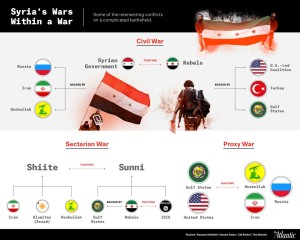
There are broadly two sides in the conflict: there’s the Syrian government (led by Assad) and then there are the rebels.
Both sides are Muslim but the government side is Shiite while the rebel forces are largely Sunni. Shiite’s are a minority group within the islam world (<10%) and tend to be more “modern” in Western eyes while Sunni’s are more traditionalist islamic. This is partly due to the former believing that religious leadership is hereditary while the latter strictly observes the ancient scriptures.
The difference shows in it’s most practical sense by the fact that the rebel forces are riddled with AQ & ISIS forces.
There are of course the Kurds but these want independence rather than regime change in Syria so I am just (while I think that they’re a great ally of the West) going to leave them aside for the moment.
So the rest of the world is faced with a choice between two sides: The more modern/western government or the traditionalist/hardcore islamic rebels riddled with terrorist groups.
And here comes the twist; the USA (and Europe to some extent) has decided to support the rebels. Yes that’s right, the group containing strong elements of the organisations responsible for the many, many terror attacks across the globe in the recent decades.
Russia on the other hand has put their might behind the government forces.
Why? I’m sure that it’s not because of love for Assad but rather because Russia is seeing the bigger picture and taking a long-term view. If the rebels are allowed to win this war than Syria will turn into a failed state occupied by a number of radical islamist groups who will not only continue to fight each other but who will continue to plan and execute attacks on the rest of the world. It would be as big or even bigger mess than Libya is now.
If the rebels are defeated however then we are left with a more moderate state with not only an ideology more favourable to the western world but a state and a government which owes a huge debt to whichever countries helped it to defeat the rebels. At that time the opportunity to either replace Assad or to force him to stop committing atrocities against his own people presents itself. It’s good old-fashioned nation-building.
So as a conclusion ask yourself this; what do you want the future Syria to be like? Another radical islamist breeding ground or a country with a government which is not only respectful of its own citizens but also a country which is sympathetic to western democratic values and beliefs?










 BLITZKRIEG BOPP